

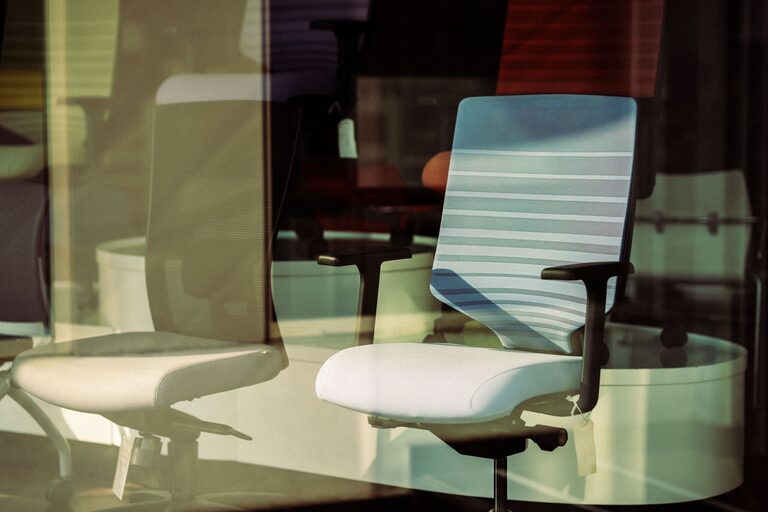
A comfortable desk chair can make a major difference in how you work, study, or spend time at a computer. The right chair supports your body, encourages good sitting habits, and helps you stay focused throughout the day. However, choosing one can be difficult when there are so many styles, features, and price points available.
Instead of focusing only on appearance, consider how the chair fits your body, desk, room, and daily routine. The following tips can help you compare options and choose a desk chair that feels comfortable and works well in your space.
Start With the Right Size
Desk chairs are not one-size-fits-all. A chair that feels comfortable for one person may feel too narrow, too deep, or too low for someone else.
Pay attention to these measurements:
– Seat width: Make sure the seat gives you enough room to sit comfortably without pressing against your hips.
– Seat depth: You should be able to sit back while keeping a small space between the front edge of the seat and the backs of your knees.
– Backrest height: The backrest should support your back without forcing your shoulders into an awkward position.
– Chair height: Your feet should rest flat on the floor, with your knees positioned comfortably around the level of your hips.
If more than one person will use the chair, look for adjustable features that can accommodate different body sizes.
Look for Adjustable Features
Adjustability is one of the most useful features in a desk chair. It allows you to position the chair around your body instead of trying to adapt your posture to a fixed design.
Useful adjustments may include:
– Seat height
– Seat depth
– Backrest angle
– Armrest height and width
– Lumbar support
– Headrest position
– Seat tilt or tension
At a minimum, choose a chair with adjustable seat height. Ideally, you should also be able to adjust the armrests and back support. These features make it easier to keep your computer, desk, and chair working together.
Avoid paying extra for adjustments you are unlikely to use. The most important features are the ones that help you sit comfortably and maintain a relaxed position.
Check the Seat Cushion
A seat cushion affects comfort more than many people expect. A chair that looks attractive may become uncomfortable after an hour if the cushion is too firm, too soft, or poorly shaped.
When testing a chair, sit in it for several minutes rather than only trying it for a few seconds. Notice whether the cushion provides even support and whether you feel pressure in one area.
Consider these points:
– The cushion should feel supportive without being painfully hard.
– It should not sink so deeply that standing up becomes difficult.
– The front edge should not press into the backs of your legs.
– The material should remain comfortable during longer periods of sitting.
Foam cushions often provide a balanced combination of support and softness. Mesh seats can offer airflow, which may be useful in warm rooms, but they may feel different from traditional padding. Your personal comfort matters more than the material label.
Choose a Supportive Backrest
A good backrest should support your back while allowing you to move naturally. It should not force you into a rigid position or leave large unsupported areas.
Look for a backrest that:
– Follows the general shape of your back
– Supports the lower back
– Allows some reclining
– Feels stable when you change positions
– Is tall enough for your preferred sitting style
Some chairs include built-in lumbar support, while others have adjustable lumbar pads. Adjustable support can be helpful because people have different back shapes and preferences. If a chair does not include lumbar adjustment, make sure the lower part of the backrest fits comfortably against your lower back.
A reclining backrest can also be useful. Slightly changing your position during the day may feel more comfortable than sitting at one fixed angle.
Pay Attention to Armrests
Armrests can reduce pressure on your shoulders and help you relax your upper body. However, poorly positioned armrests can get in the way of your desk or encourage awkward shoulder positions.
Your armrests should allow your elbows to rest comfortably while your shoulders remain relaxed. They should also fit under or around your desk when needed.
Adjustable armrests are usually the most flexible. Look for options that move up and down, and consider models that also move inward, outward, forward, or backward. If you prefer to move your arms freely or use a compact desk, a chair with removable or no armrests may be a better choice.
Make Sure the Chair Fits Your Desk
Even a well-designed chair may feel uncomfortable if it does not work with your desk. Before buying, measure the space under your desk and compare it with the chair’s dimensions.
Check the following:
– The chair can slide under the desk if needed.
– The armrests do not hit the desktop.
– Your legs have enough room to move.
– The seat can be adjusted to a comfortable height.
– Your monitor can be positioned near eye level while you sit properly.
A chair should help you create a comfortable working position, not force you to raise your shoulders or bend your wrists. If the desk is unusually high or low, a chair with a wide height range may be especially useful.
Consider the Wheels and Base
The base and wheels affect both movement and stability. A five-point base is common because it provides a good balance of support and mobility.
Choose wheels based on your floor:
– Hard plastic or nylon wheels may work well on carpet.
– Softer wheels can be better for wood, tile, or other hard flooring.
– A floor mat can protect delicate surfaces and make rolling easier.
The chair should move smoothly without sliding unexpectedly. Test whether it feels stable when you sit down, stand up, or turn. If you do not need to move often, a stationary chair may be a simple and practical alternative.
Compare Materials and Breathability
Desk chairs are available in fabric, mesh, leather, synthetic leather, and other materials. Each has different advantages.
Fabric often feels soft and warm, while mesh allows more airflow and may be easier to use in a warm room. Leather and synthetic leather can be easy to wipe clean, although they may feel warmer during extended use.
Think about your room, cleaning preferences, and daily habits. If you eat or drink at your desk, a material that is easy to clean may be useful. If your workspace becomes warm, a breathable backrest can improve comfort.
Test the Chair Before Buying
Whenever possible, try a chair in person. Sit normally, adjust the height, recline, and move your arms as you would during a typical workday.
Ask yourself:
– Can I keep both feet supported?
– Does the backrest feel comfortable?
– Are my shoulders relaxed?
– Does the seat create pressure behind my knees?
– Can I reach my keyboard and mouse easily?
– Does the chair feel stable when I move?
If you are buying online, read reviews carefully and check the return policy. Comfort is personal, so a return option is valuable if the chair does not suit your body.
Consider Long Term Value
The cheapest chair is not always the best value, especially if it wears out quickly or lacks important adjustments. At the same time, a high price does not guarantee comfort.
Compare the chair’s construction, warranty, replacement parts, and adjustment options. A durable chair with a good warranty may be a better choice than a less expensive model that needs to be replaced often.
Before shopping, decide which features matter most to you. For example, you might prioritize lumbar adjustment, a breathable backrest, or a compact design. A clear list can help you avoid paying for features that do not improve your everyday experience.
Final Thoughts
Choosing a comfortable desk chair starts with understanding your body and workspace. Focus on proper size, useful adjustments, supportive cushioning, and a backrest that feels natural. Make sure the chair works with your desk, fits your floor, and suits the amount of time you spend sitting.
The best chair is not necessarily the most expensive or the most stylish. It is the one that lets you sit comfortably, change positions easily, and work with less distraction throughout the day.